
Warnings over counterfeit and unidentified stress-relief toys
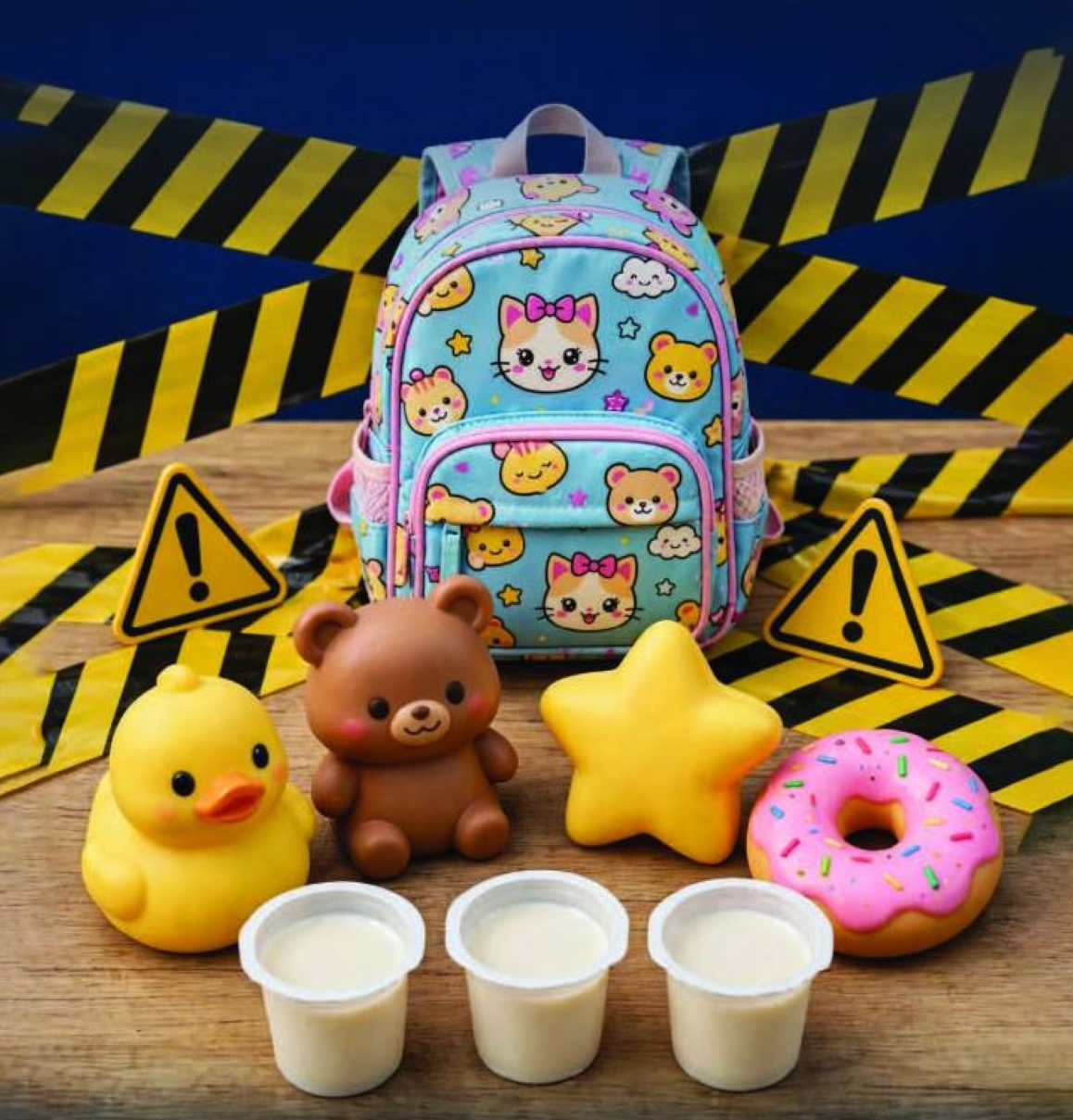
Bright colours, soft textures and shapes resembling sweets, fruits, animals and children’s favourite characters, combined with small sizes that make them easy to slip between books and stationery — this is how “squishies”, “Nido” and other sensory stress-relief toys have found their way into students’ schoolbags.
For some children, these toys have become a trend, with different designs being exchanged among students at school. However, their growing popularity raises concerns that go beyond entertainment and into product safety and proper use, particularly when toys are of unknown origin or when their outer covering becomes torn, exposing the material inside.
The issue has gained greater importance amid local and international warnings about the misuse of certain stress-relief toys and slime, as well as products of unknown origin or those that do not meet safety standards.
Educators, specialists and doctors have stressed that this does not mean all squishies or stress-relief toys are dangerous. Rather, it highlights the need for families and schools to pay attention to the source, condition and intended use of these products, particularly as they are passed between students and, in some cases, become a source of distraction during lessons.
Dubai Police has warned against imitating videos circulating on social media in which children and teenagers place squishies, slime or “Nido” inside microwaves to increase their temperature and make them softer. Authorities stressed that such practices can result in burns and serious injuries to children and teenagers.
They explained that exposing slime to high temperatures may cause it to expand and release vapours and hot substances that could burst or splatter when removed from the microwave. This could expose children to direct burns to the face, hands and body, in addition to potentially damaging household appliances or causing fires. Authorities warned against blindly imitating practices children see on social media platforms.
The Child Safety Department of the Sharjah Family and Community Council has also urged families to exercise caution when dealing with squishies and slime of unknown origin. The organisation noted that some squishies may contain gels, liquids, powders, sand or water beads.
If the outer covering tears, the child may come into direct contact with the contents. Water beads may also pose a serious risk if swallowed, as they can expand after absorbing liquid.
Families are advised to check the recommended age range, manufacturer or importer information, and safety warnings before purchasing such products. Toys should be discarded if they develop cracks, holes or leaks, and low prices or attractive designs should not be considered sufficient reasons to purchase them.
Warnings also extend to how these toys are used. The organisation recommends keeping squishies away from microwaves, hot cars, direct sunlight, heaters and other heat sources. Children should not be allowed to cut or puncture the toys or imitate experiments they see online.
Children should also be prevented from coming into direct contact with the contents of damaged toys or bringing them near their eyes or mouths. Families are also advised to avoid recipes for homemade versions that rely on cleaning products, household chemicals or unknown substances, while ensuring children wash their hands before and after playing.
Dr Hanadi Saleh Al Yafei, Director-General of the Child Safety Department, said:
“Protecting children begins with awareness of the products that enter their daily lives and understanding how to select and use them. With toys such as squishies and slime becoming increasingly popular among children and across social media platforms, families have an important role to play in guiding children towards choices that combine enjoyment with safety.
“This choice should be based on whether the toy is appropriate for the child’s age, whether it has been purchased from a trusted source, and whether its product information, ingredients, instructions for use and accompanying warnings are clearly provided. The popularity of a toy is not enough to determine whether it is safe. A lack of such information should prompt families to pause and verify the product before purchasing it or giving it to a child.”
She added:
“Safety awareness also extends to the experiments and videos children watch, which may encourage them to use toys in ways that are contrary to their intended purpose, such as cutting, puncturing or heating them, or mixing their contents with other materials.
“This is where conversation and guidance become essential. Children need to understand that the appeal of online content and the number of times it has been viewed do not mean that imitating it is safe. Our responsibility is to explain instructions for use in language appropriate to the child’s age, intervene when we observe unsafe behaviour, explain why it is unsafe and encourage children to ask questions before attempting something they have seen.
“Through these everyday practices, we can help children develop the ability to distinguish between safe and unsafe choices and make more informed decisions.”
Al Yafei also stressed:
“Families and schools have complementary roles in establishing this culture through clear rules and consistent guidance. When children bring toys to school, it is important for families to ensure that they comply with school regulations and for families and schools to communicate regarding any concerns related to their use and children’s safety.
“Our goal is to provide children with space to play and explore within a safe environment, with supervision appropriate to their age and needs, while making safety part of their everyday behaviour — from selecting a toy to using it and sharing it with others.”
From personal belongings to classroom distractions
Educators have also noted that stress-relief toys are increasingly appearing among students’ personal belongings. The issue extends beyond product safety when toys are brought from home to school, as they can become a source of distraction and be exchanged between classmates during the school day.
Educator Dr Mohammed Fath El Bab said the small size of squishies and “Nido” toys and the ease with which they can be placed inside schoolbags make it simple for students to bring them to school. Their different shapes and colours can also encourage students to collect, compare and exchange them, turning what began as an individual toy into a trend among groups of students.
He explained that exchanging toys is an area that warrants attention. A student may return home with a different toy that was not purchased by the family, leaving parents unaware of its source, product information or condition before it reached the child. This makes it difficult for parents to monitor everything their children use.
Educator Layla Ahmed stressed that dealing with these toys should not be limited to confiscation and prohibition. The primary objective should be to help students understand why a particular product may be unsuitable or why they should not open a damaged toy or touch material that has leaked from it.
She explained that there is a distinction between toys brought to school for entertainment and sensory tools that may be used in a structured manner with certain students based on specific educational needs. Therefore, the assessment should take into account the purpose of use and its impact on the student and classroom.
She added that teaching students a simple rule — “Do not open it, puncture it, heat it or use it if its contents have leaked” — can provide benefits beyond the school environment, unlike simply banning the toy in the classroom.
Educator Heba El Sherbiny said monitoring a child’s schoolbag should not stop at books, notebooks and electronic devices. It should also include the smaller items children carry with them, particularly given how quickly popular toys spread among students.
She stressed that a child may receive a toy from a classmate or exchange it without understanding the difference between a trusted product and one of unknown origin. Building awareness can help children recognise that a damaged or leaking toy should not be used.
Schools can also use such situations as opportunities to teach students basic principles of personal safety. Students should understand that leaking material should not be touched out of curiosity and that a damaged outer covering means they should stop using the toy and inform an adult.
Clinical psychologist Dr Maysaa Al Abdullah confirmed that the appeal of stress-relief toys is linked to their sensory nature. Repeatedly squeezing a soft, flexible material can provide some children with a sense of enjoyment or sensory engagement, and some may experience a calming effect while using them.
However, this potential benefit does not mean they should be used freely throughout the school day. The same tool can become a source of distraction if a student remains focused on it during lessons or repeatedly passes it to classmates.
She noted that the most important consideration is its effect on the child’s behaviour. If the toy begins to dominate the child’s attention or the child is unable to put it aside when required, its use should be regulated.
The influence of imitation
Social specialist Shahinaz Abu El Fotouh said peer imitation is one of the key drivers behind the spread of popular toys. A child may want to own a particular design simply because they have seen it with classmates, rather than because they actually need it.
She added that social media platforms have accelerated the spread of these toys. A short video can quickly turn a product into something that large numbers of children want to own or experiment with in the same way they have seen online.
She stressed that this means families should not only ask children which toy they want, but also ask what they have seen about it. Some risks may begin with the method of use shown on a screen rather than with the normal intended use of the product.
When the toy is damaged
Fatma Ibrahim Shaker, a child protection specialist, stressed that the appearance of a hole, crack or leak in a stress-relief toy should be considered a clear reason to stop using it, particularly when the family does not know the nature of the material inside.
She explained that attempting to repair a damaged toy and return it to the child is not an appropriate option once its contents have leaked. Children should also not be allowed to deliberately open or squeeze a damaged toy to find out what is inside.
She noted that a strong chemical smell, a change in texture, the appearance of an unusual oily or sticky substance, or the absence of manufacturer information, recommended age and safety warnings are all signs that should be taken seriously.
Dr Nibal Al Bitar, Consultant Paediatrician, warned that younger children rely heavily on curiosity and exploration when interacting with objects around them. A child may put a toy or part of it in their mouth, bring it close to their nose or attempt to open it to discover what is inside.
The risk increases with toys of unknown origin, poorly manufactured products, toys that can tear easily or those containing small detachable parts. She stressed that swallowing part of a toy or having it enter the airway can result in choking or airway obstruction.
She added that the risk is not limited to ingestion. When some squishy toys tear, their contents may come into contact with the skin or eyes, potentially causing irritation, redness or other symptoms depending on the nature of the substance and the duration of exposure.
Dr Najeeb Salah Abdul Rahman, Gastroenterology Specialist, explained that swallowing expandable water beads can lead to serious health problems, particularly among young children.
He noted that these beads can continue absorbing fluid within the digestive system. If they become lodged in the intestine, they may increase in size and cause a partial or complete obstruction, preventing the passage of food, fluids and gas.
The risks associated with slime are different because of prolonged skin contact, particularly when children spend extended periods touching, kneading or mixing it with other substances.
Dr Keerthi Subramanian, Dermatology Specialist, said slime can be an enjoyable sensory activity, but products of unknown origin or homemade slime prepared using unidentified substances may cause skin problems.
She explained that contact dermatitis is among the most common concerns and may result either from direct irritation or an allergic reaction to one of the ingredients.
She advised preventing children from putting slime in their mouths or touching their eyes while playing, washing their hands afterwards and avoiding prolonged use, particularly among children with sensitive skin.
Dr Ahmed Wisal, Consultant in Special Education and Clinical Mental Health, said digital literacy has become an essential component of child safety because children today receive ideas about games and experiments from social media platforms, rather than solely from their families or schools.
Iman Ezz El Din, who holds a Master’s degree in Media and Child Culture, also explained that children do not always view videos they watch as advertising or commercial content. Instead, they may perceive them as entertaining experiments that they can imitate.
She noted that this can increase children’s desire to imitate what they see and make it more difficult for them to distinguish between entertainment and safe behaviour.
Dr Wafaa Ayash, Chair of the UAE Chapter of the Parenteral and Enteral Nutrition Association and Vice President of the Arab Society for Clinical Pediatric Nutrition, stressed the importance of exercising caution with any stress-relief toy that becomes torn or begins to leak.
Children should not be allowed to put the contents of a damaged toy in their mouths or touch their eyes or face before thoroughly washing their hands.
She added that an unusual smell, leakage or a noticeable change in the toy’s texture are signs that it should no longer be used and should be discarded rather than repaired and returned to the child.
She also stressed the need for increased supervision of younger children, given their tendency to put objects in their mouths or touch their faces and eyes while playing.
Symptoms that should not be ignored
Dr Hussein Al Adly Abu El Magd, Head of General Medicine at Oriana Day Surgery Hospital, said swallowing an unknown substance that has leaked from a damaged toy should not be treated as a trivial matter simply because the product is sold as a children’s toy, particularly when its ingredients or manufacturer are unknown.
He explained that unusual symptoms following exposure, such as vomiting, abdominal pain or dizziness, should not be ignored. Medical advice should be sought according to the nature of the exposure and the symptoms, rather than attempting to determine whether a substance is safe based on its colour, appearance or smell.
He added that toys containing beads or small parts require additional caution among younger children, as the risk may involve choking or ingestion, rather than being limited to the nature of the material inside the product.
Families are advised to keep the toy’s packaging and product information whenever available, as these details may be useful if medical advice is required.
Dania Ahmed Al Saedani, a mother, said she has become more careful when purchasing toys after one of her children insisted on buying a toy they had seen in a widely shared video.
She explained that the packaging did not provide clear information about the manufacturer or recommended age range, while her child was interested only in its colour and shape. She refused to purchase the toy and explained to her child that a product becoming popular among friends or appearing online does not necessarily mean that it is suitable or safe.
She stressed that the growing influence of digital content and peers has made the task of parenting more challenging.
Abdullah Al Balushi, a father of five, said his family had experienced issues with some of these toys, including irritation and sensitivity resulting from contact with the skin or eyes.
He explained that some children also try to make slime at home using cleaning products and other substances after watching online videos, which could expose them to greater risks.
Seven warning signs
Experts have identified seven warning signs that should prompt parents to stop a child from using the toy:
- No identifiable manufacturer or source.
- No clear recommended age range or safety warnings.
- A strong chemical smell.
- An unusually oily or sticky texture.
- Cracks or holes in the outer covering.
- Leakage of the toy’s contents.
- Small detachable parts that could be swallowed.
Experts stressed that the appearance of any sign of damage should be treated as a reason to stop the child from using the toy. Replacing a small toy is a minor inconvenience compared with the potential risk of continuing to use a damaged product or one containing unknown substances.
Educators:
Stress-relief toys have evolved from tools for easing tension into sources of distraction in classrooms.
Specialists:
Children need to understand what they are buying and touching — simply banning the toys is not enough.
Doctors:
The risk increases when a toy is damaged or when its contents come into contact with the mouth or eyes.
Read more at:

