
Family Support, Prioritisation and Flexibility Have Empowered Emirati Women to Build Successful Careers
Taking on Greater Responsibilities in Advancing Healthcare Services, Supporting Colleagues and Caring for Patients
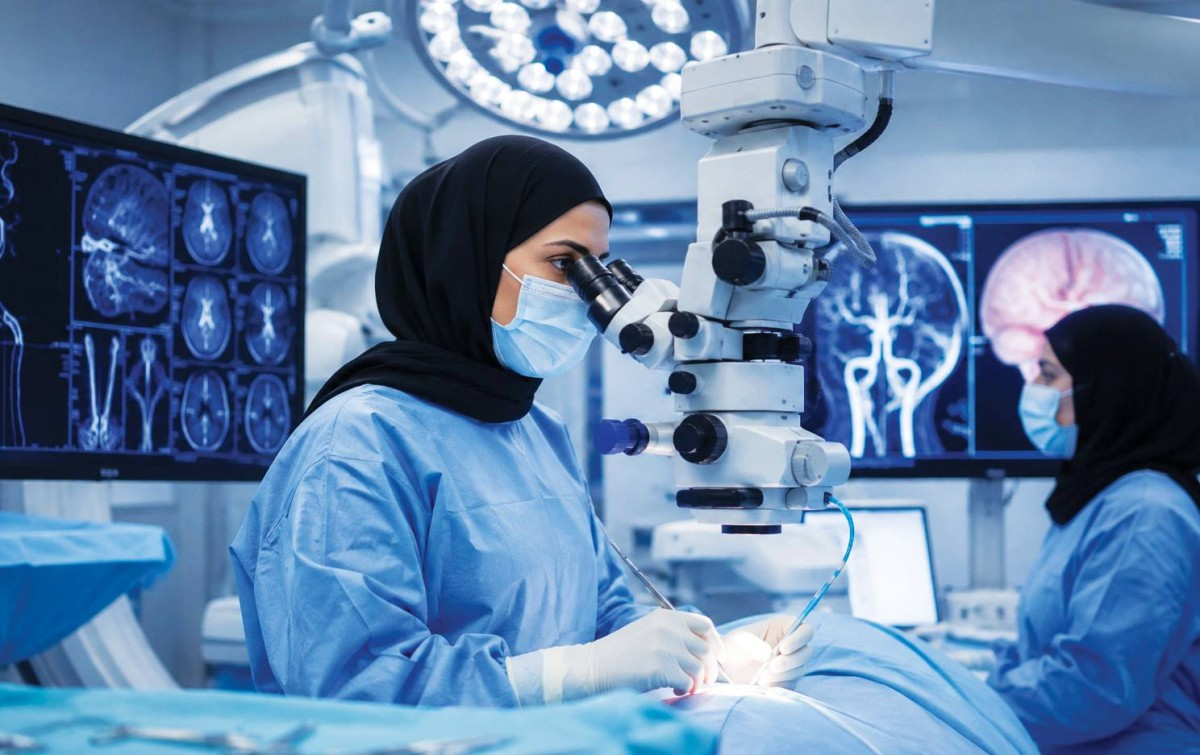
Emirati female physicians and healthcare professionals have affirmed that Emirati women have moved beyond simply establishing their presence in the healthcare sector to becoming active contributors to specialised medical fields, scientific research, innovation, leadership and decision-making. This progress has been supported by the educational, training, scholarship and specialisation opportunities provided by the UAE. Looking ahead, Emirati women in healthcare aspire to play an even greater role in genomic medicine, digital health, artificial intelligence, specialised medical fields and healthcare leadership.
Speaking on the occasion of Emirati Women’s Day, observed annually on 28 August and celebrated this year through a month-long programme of activities, they noted that achievement is no longer measured solely by the growing number of female physicians and nurses, but also by the nature of the positions and responsibilities they undertake—from providing clinical care to leading departments, developing healthcare services, contributing to research and innovation, and helping shape the future of healthcare.
In statements to Al Bayan, they explained that healthcare professions present unique challenges due to long working hours, intensive training, continuous learning and direct responsibility for patients. However, family support, the ability to prioritise and flexibility have helped Emirati women build advanced professional careers while maintaining their family and personal responsibilities.
Dr Abeer Al Raisi, Consultant Family Medicine and a Member of the Royal College of General Practitioners, said Emirati Women’s Day is an occasion to take pride in the achievements of Emirati women, made possible by the support and confidence of the UAE’s leadership. She expressed her pride in progressing from practising as a physician to taking on greater responsibilities in developing healthcare services, supporting colleagues and caring for patients.
“I am proud to have been able to balance my roles as a physician, leader and mother, while continuing to learn and develop and maintaining the human aspect that I consider fundamental to the medical profession,” she said.
She emphasised that Emirati women are no longer simply participants in the healthcare sector; they are now consultants, specialists, researchers, academics, leaders and decision-makers, reflecting the expanding opportunities available to them across different areas of medicine.
Dr Dina Ahmed, Consultant Internal Medicine, who holds the Arab and Jordanian Boards in Internal Medicine and the UAE Board in Adult Rheumatology, said her career is the result of an investment in education that began with her family and was further supported by a country that believed in women’s capabilities and opened opportunities for scholarships, specialisation and leadership.
She highlighted the establishment and development of rheumatology services at the hospital where she works, expanding them to include advanced treatments and osteoporosis services while ensuring continuity of care for complex cases.
“The value of achievement is not in the title, but in the service we build and leave behind for the patient,” she said.
She noted that the transformation in the role of Emirati women is increasingly reflected in the nature of the positions they hold. Emirati women are now working in highly specialised fields, leading departments and contributing to research and decision-making. She added that one of the most important forms of empowerment is a woman reaching a leadership position and then creating opportunities for other talented women to follow.
She also highlighted the positive impact of the growing presence of Emirati female physicians on female patients, particularly in cases requiring greater privacy, which can help strengthen trust, access to care and continuity of treatment.
“Medicine is a long journey that requires discipline and time. Work-life balance is not a fixed equation; priorities change across different stages of life. Family support has been fundamental to my ability to continue and progress,” she said.
She added that the future of women in healthcare extends across precision medicine, research, innovation and leadership, emphasising that Emirati women today are not simply choosing their place in the future of medicine—they are helping shape it.
Dr Nora Yousef Saif Sabah Al Ali, Consultant Family Medicine, said reaching the position of consultant represents the culmination of years of study, training, professional practice and continuous learning. However, she views the position as a responsibility as much as an achievement.
She explained that what she values most about family medicine is its ability to see the person behind the illness and accompany patients and their families through different stages of life. The most meaningful moments in her career are not necessarily the most complex cases, but rather the moments when patients feel understood, reassured and genuinely cared for.
She emphasised that Emirati women are increasingly leading teams and contributing to research, education and training. True progress, she said, is not reflected in numbers alone, but in women having the confidence to pursue different specialties and aspire to leadership positions.
She encouraged young Emirati women to consider family medicine and fields related to women’s and children’s health, mental health, preventive medicine, geriatric medicine, genomic medicine and scientific research, as well as digital health and artificial intelligence. She stressed that the future of healthcare requires clinical competence alongside empathy, scientific curiosity and the ability to lead change.
Farah Obaid Ali Asadullah, Head of Radiology and Radiation Protection Officer at Mubadala Health Dubai, said her promotion from a radiologist to Head of Department represents an important milestone in her career, enabling her to lead a team, support workforce development and improve the quality and efficiency of radiology services.
She emphasised that opportunities for Emirati women are no longer limited to medicine and nursing, but extend to radiology, medical imaging, technology, research, administration and leadership. She noted that rapid technological transformation is creating significant opportunities for women in interventional radiology, medical technology and artificial intelligence.
She encouraged young women not to limit their career choices because of preconceived notions about their abilities, but instead to continue learning, embrace challenges and step outside their comfort zones.
Al Anoud Ali Al Naqbi, a nurse, said one of the aspects she is most proud of in her profession is the ability to make a direct difference in patients’ lives, even through simple human gestures such as reassuring a patient, listening to them or supporting their family during moments of anxiety.
She emphasised that nursing extends beyond medications, procedures and clinical skills; it is equally grounded in compassion, patience and respect for the dignity of every patient. Nurses, she noted, have become an integral and central part of the healthcare system rather than simply a supporting element.
She explained that nursing can involve significant physical, psychological and emotional pressures, particularly with long shifts and cases that remain deeply memorable. Through her experience, she has learned to manage her responsibilities, prioritise effectively and seek support when needed, emphasising the importance of family support and understanding of the demands of the profession.

