
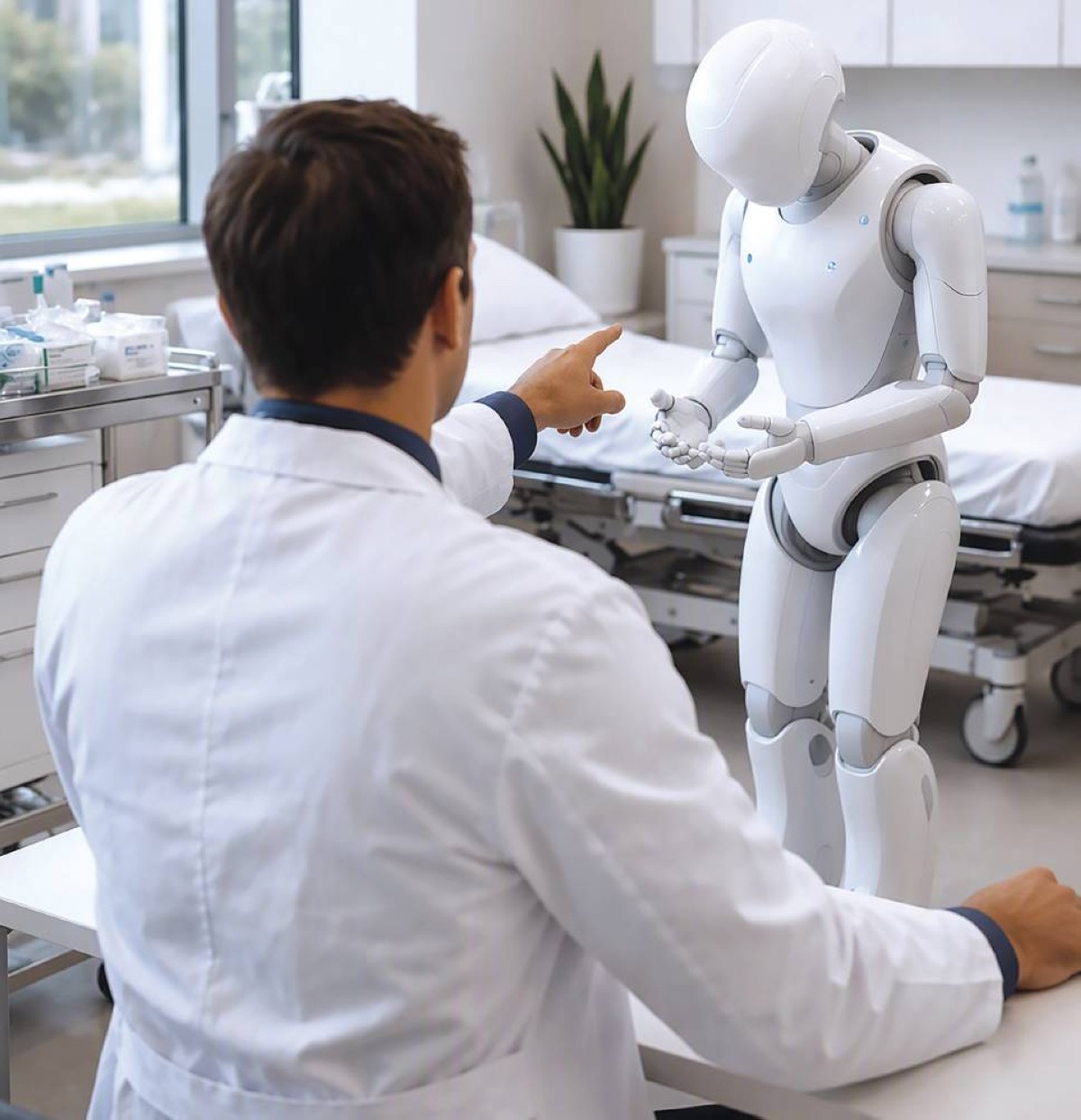
Dangerous Consequences of the Phenomenon: Delayed Care, Deteriorating Conditions, and Drug Interactions
Many patients rely on the internet to diagnose their medical conditions. Some move beyond simply seeking health information to making diagnoses and medical decisions themselves. These decisions may include delaying a trip to the emergency department, taking medications or supplements, or changing treatment doses based on information found online.
Doctors have warned about this phenomenon and its associated risks, emphasizing that the problem is not the use of the internet or artificial intelligence to obtain health advice. Rather, it begins when these tools become a substitute for a doctor and a clinical examination—particularly because a single symptom can have dozens of possible causes, ranging from minor conditions to life-threatening diseases.
They stressed that the dividing line in dealing with the “digital patient” is not between using or rejecting technology, but between using it to better understand one’s health and allowing it to make diagnostic and treatment decisions. Digital information may help a patient ask the right question, but medical answers remain dependent on the patient’s medical history, clinical examination, diagnostic tests, and the doctor’s expertise.
Doctors also stressed that some symptoms cannot wait, and that patients should not continue searching online for explanations when urgent medical attention is required. These include severe or sudden chest pain or pressure, particularly when accompanied by shortness of breath, sweating, nausea, or pain radiating to the arm, neck, jaw, or back.
Studies
Recent studies indicate that the concept of the “digital patient” has become part of the changes taking place in the healthcare sector. In a recent study conducted by researchers from a university in the region and involving 1,377 people, the results showed that 43.9% of participants preferred self-diagnosis online to consulting healthcare professionals.
Ease of access and lower cost were among the main reasons for preferring online diagnosis, cited by 54.6% of participants. Meanwhile, 33.7% cited saving time, and 34.1% cited a sense of confidence and comfort.
The results also showed that 17.9% were willing to use over-the-counter medications after an online diagnosis, while 26.8% would use herbal treatments. In contrast, 54.7% preferred to obtain confirmation from a healthcare professional before starting treatment.
Chatbots
In another indicator, a recent report published by an organization specializing in health policy found that individuals are increasingly turning to artificial-intelligence-powered chatbots for advice concerning physical and mental health.
Many of them, however, do not follow up these consultations by seeing a doctor or specialist. The survey, which included 1,343 adults, found that approximately one-third of participants had used AI tools to obtain health advice.
Among those who sought advice about physical health problems, 42% did not subsequently consult a doctor. The figure rose to 58% among those who used the tools for mental-health support or advice.
The report also found that people aged 18 to 29 were the most likely to rely on these tools and the least likely to follow up with doctors or specialists. Young people used AI for mental-health-related issues at a rate as much as three times that of adults over the age of 50.
Accuracy
These studies raise questions about the extent to which “digital patients” can rely on diagnoses or explanations of their symptoms obtained online. Doctors view this as an important dividing line between using technology to acquire knowledge and making medical decisions based on that information.
Dr. Lalu Chacko, Medical Director of Medcare Hospitals and Medical Centres, said that patients’ use of the internet, search engines, and AI tools before visiting a doctor has become increasingly common.
Patients frequently search for information about headaches, fatigue, dizziness, stomach or abdominal problems, skin changes, sleep problems, and unexplained changes in weight, as well as diabetes, thyroid disorders, infections, and vitamin deficiencies.
He explained that online research can be a useful first step toward understanding a health condition. However, the same symptom can have multiple causes, making it important to distinguish between looking for information about a symptom and diagnosing oneself.
He noted that a doctor has access to a clinical picture that search tools cannot provide. This includes the patient’s medical history, medications, family medical history, clinical examination, and, when necessary, test results.
He gave fatigue as an example. It may be related to insufficient sleep or stress, but it can also be associated with anemia, thyroid disorders, nutritional deficiencies, infections, or other health conditions.
He warned of two opposing consequences of online searching. The first is unnecessary anxiety when patients encounter information about serious diseases that are unlikely to be the cause of their symptoms. The second is a false sense of reassurance that may lead them to ignore a symptom requiring medical attention.
Emergencies
The risks of self-diagnosis are not limited to anxiety or misinterpreting symptoms; they can also result in delayed medical care in situations requiring urgent intervention.
Dr. Hisham Tayel, a consultant cardiologist and interventional cardiologist, said that the widespread availability of smartphones, health websites, and AI-powered chat programs has made it possible to obtain medical information within seconds.
The symptoms most commonly searched for by patients include chest pain, palpitations, shortness of breath, headaches, dizziness, abdominal pain, fatigue, and unexplained weight loss.
He warned that the greatest danger lies in “oversimplification.” Chest pain, for example, may result from muscle strain, acid reflux, or anxiety, but it may also be associated with pneumonia or a heart attack.
He said that, in clinical practice, he had encountered patients who delayed seeking medical care because they believed their symptoms were caused by stress, indigestion, or fatigue after consulting online sources.
He noted that some cardiovascular patients experiencing chest pain had delayed going to the emergency department because information they found online had reassured them.
He warned that delaying the diagnosis and treatment of heart disease can result in irreversible damage to the heart muscle, heart failure, or dangerous heart-rhythm disturbances, and in some cases can lead to death.
He also said that he had encountered patients who began taking dietary supplements or over-the-counter medications based on recommendations they had obtained online, without knowing their potential side effects or drug interactions.
Another aspect of the phenomenon is that repeatedly searching for symptoms can increase health anxiety rather than reassure patients.
Dr. Lina Menon, a family medicine consultant at NMC Specialty Hospital – Abu Dhabi, said that digital self-diagnosis is particularly common among young people and those accustomed to using digital technologies.
She explained that the problem begins when gathering information turns into self-diagnosis and the patient becomes convinced that they have a particular disease without undergoing a proper clinical assessment. She warned of “digital health anxiety,” or cyberchondria.
Repeatedly searching for symptoms can increase anxiety about one’s health. A person may begin with a common symptom, only to be led by search results toward serious diseases.
She said the opposite—and potentially more dangerous—risk is a false sense of reassurance, in which a patient finds an explanation that appears to match their symptoms and decides that seeing a doctor is unnecessary.
She added that AI tools can provide answers that appear highly convincing even when they may be incomplete or incorrect. They also cannot examine a patient, assess their appearance and general condition, measure vital signs, palpate the abdomen, or listen to the chest.
She said she had seen patients arrive at the clinic having already formed a diagnosis, such as believing they had pneumonia, a vitamin deficiency, sinusitis, or cancer. She had also encountered patients who had started, stopped, or changed the doses of medications based on information they had obtained online.
She particularly warned against inappropriate use of antibiotics. Patients may assume that a cough, sore throat, or fever is necessarily caused by a bacterial infection and take antibiotics unnecessarily. This can cause side effects and contribute to the growing problem of antimicrobial resistance.
Understanding the Condition
Despite these warnings about relying on technology for diagnosis, doctors noted that using it appropriately can make patients better prepared and more informed about their health.
Dr. Brian Matimirewa, a consultant in endocrinology and internal medicine at Medcare Royal Specialty Hospital, explained that the belief that patients cannot use search tools and information to guide their decisions is a misconception. Patients have been receiving written health information for years, he noted, but information is now much more readily available and personalized.
He explained that patients need to know how to formulate questions for AI tools, asking for patient-oriented information that can help them prepare for a clinical discussion with their doctor.
He said his patients sometimes arrive for consultations carrying useful information they have obtained beforehand, making the discussion and consultation more relevant to their individual circumstances.
He emphasized that AI is not intended to replace the healthcare system, but to become part of it—helping patients improve the care they receive while supporting healthcare providers in making accurate and timely decisions tailored to each case.
He described the optimal use of the technology as “augmented intelligence,” rather than artificial intelligence replacing humans, with its value lying in supporting the relationship between the patient and the doctor.
The doctors agreed that responsible use of the internet and AI can help the “digital patient” understand medical terminology, organize information about their symptoms, prepare questions before a consultation, and learn more about their condition after receiving a diagnosis. However, these tools should remain sources of information, not sources of diagnosis.
Key points
- “Cyberchondria”: Repeatedly searching the internet for disease symptoms can worsen health anxiety.
- Some patients change their treatment plans based on information found online.
- Ease of access and lower cost are among the main reasons for the spread of online self-diagnosis.
- A doctor has a clinical picture that “smart” search tools cannot replicate.
- Commonly searched symptoms include headaches, fatigue, stomach or abdominal problems, skin changes, and sleep difficulties.
Read more at:

