

Table of Contents
Monkeypox, now most often referred to as mpox, is a rare viral illness and infection. It recently has gained global attention due to outbreaks outside its usual geographic regions. While usually not life-threatening and most cases being mild, understanding what is monkeypox, recognising monkeypox symptoms early and knowing the monkeypox treatment and monkeypox prevention strategies are key to stopping its spread. This guide is here to provide you with information that’s clear and factual. It is all based on current medical guidance.
What Is Monkeypox?
Caused by the monkeypox virus, monkeypox is a viral infection. It belongs to the same family of viruses as smallpox (orthopoxviruses) and the virus is not typically spread by monkeys despite its name. It was first discovered in 1958 in laboratory monkeys but rodents and small mammals are believed to be the primary natural hosts and carriers.
Though severe cases can occur, the illness is usually mild to moderate in humans. These most often happen in young children, pregnant women or those with weakened immune systems. The disease is self-limiting. This means it often resolves on its own over several weeks, typically two to four. Understanding what is monkeypox helps reduce unnecessary fear, helps you distinguish it from other rash illnesses like chickenpox and measles and promotes responsible health actions.
Monkeypox Causes and Transmission
The monkeypox causes are straightforward and infection can occur when a person comes into contact with the virus. This can happen in several ways with transmission possible through:
- Animal-to-human transmission (Zoonotic): Direct contact with the blood, bodily fluids or skin lesions of infected animals mostly rodents like rope squirrels, dormice, or Gambian rats is very common. This can happen through bites, scratches and handling bushmeat, most relevant in endemic regions like Central and West Africa.
- Direct contact and human-to-human transmission: This occurs via close contact with an infected person mainly via skin-to-skin or mucosal contact with lesions or scabs. Sexual contact and non-sexual close physical contact such as caregiving and household tasks are the primary modes of transmission.
- Respiratory secretions: It is spread via large respiratory droplets after prolonged face-to-face contact, being in household and healthcare settings of those affected.
- Fomite transmission: The virus remains viable on surfaces making contact with contaminated materials like bedding, towels or clothing and surfaces that have been exposed to lesion material high risk.
- Mother-to-foetus transmission: Through the placenta, a pregnant woman can pass the virus to her foetus which then leads to congenital monkeypox or foetal demise.
Monkeypox does not spread easily over long distances through the air (airborne) unlike COVID-19, which is important to note. What is typically require for the virus to transfer is close, sustained physical contact.
Monkeypox Symptoms to Watch For
5 to 21 days of exposure are usually when monkeypox symptoms appear. Flu-like signs will often mark the beginning of the illness. A distinctive rash then develops. Common symptoms include:
Early symptoms:
- Fever and chills
- Headache and muscle aches
- Backache
- Swollen lymph nodes – this in particular isa key feature that helps distinguish monkeypox from chickenpox or smallpox.
- Extreme tiredness (lethargy)Upper respiratory symptoms (sore throat, cough, nasal symptoms)
Later symptoms (rash phase):
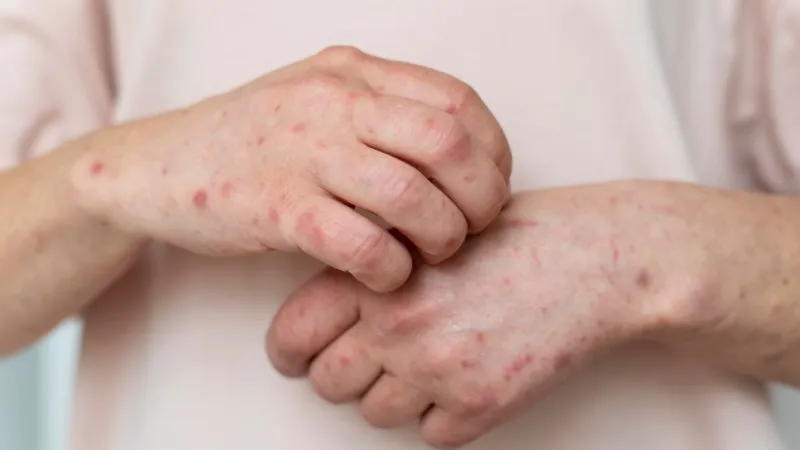
- Fever starts, and within 1 to 3 days, a rash appears. It will often begin on the face and then spread to other parts of the body, including the palms of the hands and soles of the feet.
- In cases linked to intimate or sexual contact, lesions may first appear at the site of contact, commonly in the genital or pubic area, before spreading elsewhere.
- The rash will usually progress through stages. First with flat spots (macules), then raised bumps (papules), fluid-filled blisters (vesicles), pus-filled bumps (pustules). Finally scabs will develop, which fall off.
- Until they crust over, the lesions are typically painful or itchy.
- During recovery, some patients, may experience rectal pain (proctitis), discomfort or bleeding, especially when lesions involve the genital or perianal region.
Noticing these monkeypox symptoms, especially after recent travel or close contact with a confirmed case should not be ignored. The rash can sometimes resemble other common illnesses such as chickenpox, which is why proper medical evaluation is important for an accurate diagnosis.
Monkeypox Treatment Options
There is no specific monkeypox treatment approved for general use in most countries currently. Because the monkeypox virus is similar to smallpox however, certain antiviral medications developed for smallpox can be used in severe cases. This is usually for high-risk patients and requires close medical supervision. These include:
- Tecovirimat (TPOXX): An antiviral that has shown effectiveness against orthopoxviruses.
- Brincidofovir and Cidofovir: Only under strict medical supervision these may be used. They can have kidney-related side effects.
Monkeypox treatment focuses on supportive care for most people such as:
- Rest and hydration
- To help with fever and aches, over-the-counter pain relief, like paracetamol
- To prevent secondary bacterial infections, keeping the rash clean and dry
- In some cases, particularly when lesions are extensive, confluent or involve the genital region, doctors may prescribe oral antibiotics to treat or prevent secondary bacterial infections
- For itching, using antihistamines if needed
Hospitalisation is rarely required. It may be necessary though for pain management, intravenous fluids or treating complications like pneumonia or sepsis.
Monkeypox Prevention Strategies
Practical measures are the way for monkeypox prevention such as reducing contact with the virus. Key measures include:
- Vaccination: With an 85% efficacy rate, the smallpox vaccine is called Jynneos, also known as Imvamune or Imvanexis the first and most important preventative measure. It is currently recommended for high-risk groups. This includes healthcare workers and close contacts of confirmed cases.
- Avoiding contact: Stay away from people who have a rash that looks like monkeypox. Avoid handling wild animals in endemic regions.
- Good hygiene: Wash hands frequently with soap and water or use alcohol-based hand sanitiser. Disinfect shared surfaces.
- Isolation: If you are infected, isolate at home until all scabs have fallen off and a fresh layer of skin has formed. Use separate bedding, towels and utensils.
- Personal protective equipment (PPE): When caring for patients, workers should wear gloves, masks, gowns, and eye protection such as face shields or goggles.
When these measures are consistently followed monkeypox prevention is highly effective.
When to Seek Immediate Medical Attention
Most monkeypox cases resolve without specific treatment and most of the time, emergency care isn’t required. However some cases may be critical and you should see a doctor urgently if:
- If you notice that the rash starts becoming extremely painful or shows signs of bacterial infection. This comes in the form of increasing redness, warmth or pus.
- You have difficulty breathing or chest pain.
- You experience confusion or seizures.
- After a period of improvement, symptoms worsen suddenly
With a higher risk for severe disease. pregnant women, children under 8 years and immunocompromised individuals should seek care early,
Conclusion
When detected early especially, monkeypox is a manageable viral illness. Most people recover fully with supportive care alone. By understanding what is monkeypox, recognising monkeypox symptoms, knowing available monkeypox treatment options and practising effective monkeypox prevention, you can protect yourself and your community. Stay informed and practicing good hygiene can make all the difference. The standard precautions for isolation for M-Pox is 2-4 weeks and 21 days quarantine. Antibiotics are useful in situations with secondary bacterial infections which is not uncommon.
Our infectious disease team at NMC is trained to assess, diagnose and manage monkeypox cases. Following international guidelines, we provide compassionate, evidence-based care. Do not hesitate to contact us if you have concerns about monkeypox or even for clarity on any unusual rash and rest assured your safety is our priority.
References
- Centers for Disease Control and Prevention. Mpox (Monkeypox): Signs and Symptoms (https://www.cdc.gov/monkeypox/signs-symptoms/?CDC_AAref_Val=https://www.cdc.gov/poxvirus/mpox/symptoms/index.html) Accessed 13/4/2026.
- Centers for Disease Control and Prevention. Mpox (Monkeypox): How It Spreads (https://www.cdc.gov/monkeypox/?CDC_AAref_Val=https://www.cdc.gov/poxvirus/mpox/transmission/index.html). Accessed 13/4/2026.
- Centers for Disease Control and Prevention. Mpox (Monkeypox): Treatment (https://www.cdc.gov/monkeypox/?CDC_AAref_Val=https://www.cdc.gov/poxvirus/mpox/treatment/index.html). Accessed 13/4/2026.
- Centers for Disease Control and Prevention. Mpox (Monkeypox): Prevention (https://www.cdc.gov/monkeypox/prevention/?CDC_AAref_Val=https://www.cdc.gov/poxvirus/mpox/prevention/index.html). Accessed 13/4/2026.
- National Center for Biotechnology Information. Mpox (Monkeypox) – StatPearls (https://www.ncbi.nlm.nih.gov/books/NBK574519/). Accessed 13/4/2026.
- PubMed. Clinical Features and Management of Human Monkeypox: A Retrospective Observational Study (https://pubmed.ncbi.nlm.nih.gov/35623380/)Accessed 13/4/2026.
- World Health Organization. Mpox (monkeypox): Key facts (https://www.who.int/news-room/fact-sheets/detail/monkeypox). Updated 26/8/2024. Accessed 21/4/2026.
- Thornhill JP, Barkati S, Walmsley S, et al. Monkeypox virus infection in humans across 16 countries — April–June 2022. Lancet. 2022;400(10360):739–750. DOI: 10.1016/S0140-6736(22)01426-8.
- Centers for Disease Control and Prevention. How mpox spreads (https://www.cdc.gov/mpox/transmission). Accessed 21/4/2026.

