New Year babies in UAE: Are families really planning births on January 1?
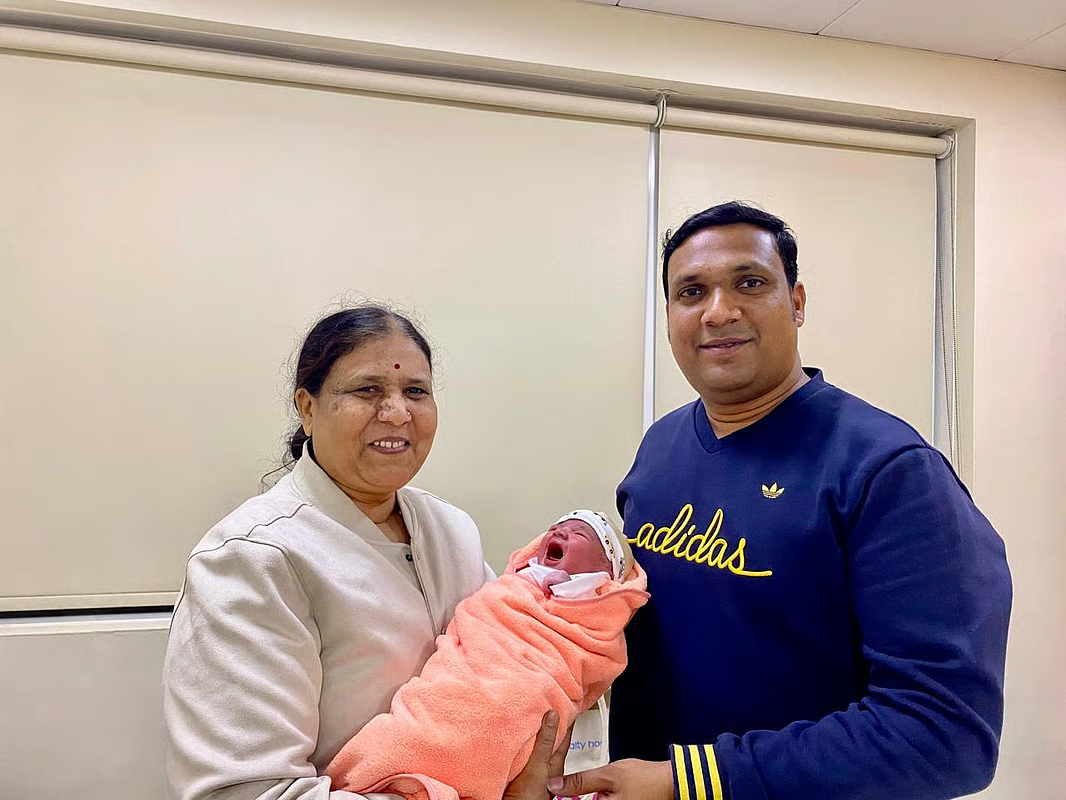
At the start of every year, babies born at the stroke of midnight make headlines. For many families, the new year becomes an even bigger occasion for celebration with the birth of a new member. But do hospitals in the UAE actually see a spike in births on January 1?
According to several hospitals in the Emirates, New Year’s Day is largely similar to any other day in the maternity ward, with only a modest number of births and no significant surge in deliveries.
At Aster Hospitals, 14 babies were born on January 1 this year, a figure that does not represent a sharp increase compared to other days. Sarah Illyas, Chief Nursing Officer at Aster Hospitals and Clinics, said there can sometimes be a slight rise due to planned inductions or caesarean sections, but overall numbers remain stable. “About 70 per cent of the births were spontaneous, while 30 per cent were planned,” she said.
Doctors say that while January 1 carries cultural and emotional significance, medical realities ultimately dictate when babies arrive. “January 1 stands out symbolically, but not demographically,” said Dr Kiran Mehndiratta, Consultant Obstetrics and Gynaecology at NMC Speciality Hospital, Abu Dhabi, adding that this was true both in the UAE and globally.
At NMC Speciality Hospital in Abu Dhabi, there were no births on January 1 last year. Dr Babush Jose, medical administrator at the hospital, said when deliveries do occur on that date, they are mostly spontaneous. “Staffing remains as per the regular schedule, as demand does not usually increase,” he said, adding that hospitals may mark the occasion with small celebrations for families.
Special date of birth
While numbers may not rise significantly, interest in “special-date” births appears to be growing. Dr Aysha Salam, Specialist Obstetrics and Gynaecology at Aster Hospital, Mankhool, said families increasingly enquire about delivering on meaningful dates. “January 1 symbolises fresh beginnings, and social media has amplified this sentiment,” she said. However, she stressed that medical guidelines remain paramount, with elective caesareans generally recommended only after 39 weeks.
Her observations were echoed by Dr Kiran. “Photos of New Year’s babies or children born on numerologically significant dates often circulate widely, reinforcing the idea that such birthdays are rare or desirable,” she said. “This heightened attention has translated into greater expressed interest among expectant parents, including enquiries about scheduled deliveries aligned with memorable dates.”
She added that first-time mothers are often more inclined to request specific dates, driven by excitement and a desire for predictability. “But biologically, first pregnancies are less predictable,” she noted, adding that medical practice almost always outweighs preference.
At Central Hospital Sharjah, three babies were born on January 1 last year. Chief Executive Officer Dr Chandra Shekhar said deliveries are managed like any other day. “We do receive requests for January 1 births, but the health and safety of the mother and baby always guide our decisions,” he said.
Read more at: